First, you want to carefully brush the bees from the honey comb back into the hive. Then, place the bars over a bucket or cut the comb into a bucket. Placing the combs is maybe better, since you may lessen the amount of bees that end up getting stuck in the honey. You can brush them off later but brush off as many as possible immediately. Make sure that your bars are clearly marked and your false back is ready for when you want to close the hive.
 When you have the honeycomb ready, you need to remove all of the bees. If the bees have died a vainglorious death, drowning in their honey or staying heroically with the comb, remove them. Then, with your hands or with a potato masher or some other tool, crush the comb and honey. I prefer hands, since it rather forces me to check for bees or other foreign ickies that I might want to remove.
 Do so until you have a paste-like substance.
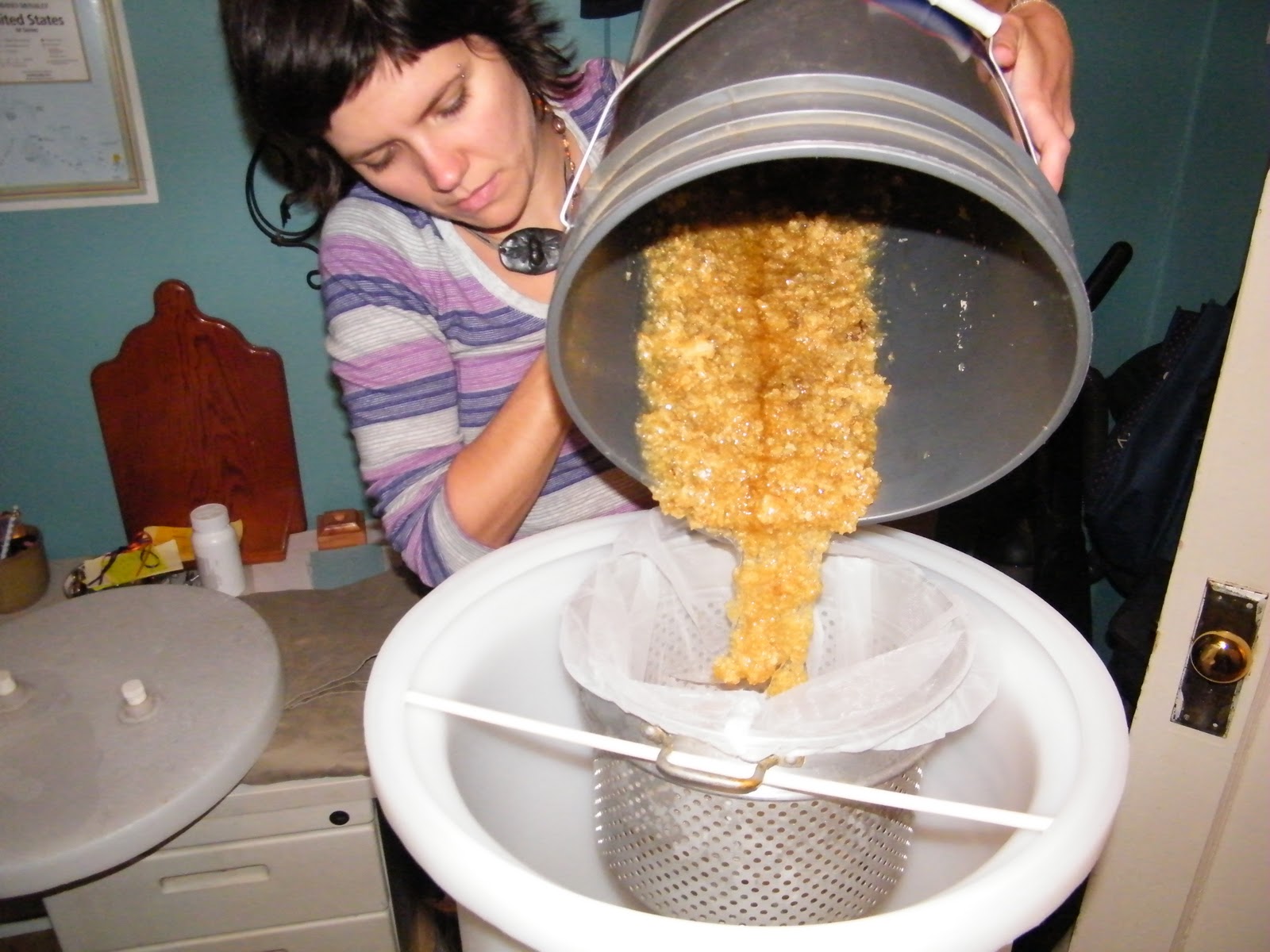
 Now, here's the part that takes a wee bit of planning. You need to have a bucket with a spigot or, in our case, a conical fermentor that you can filter the honey into. You will also need a 5-gallon paint-filter bag (aprox. $2.00 for 2 at Lowes) and then some way to attach the bag, be it a giant sieve or the top of a bucket after it's been cut in half with binder clips or clamps.
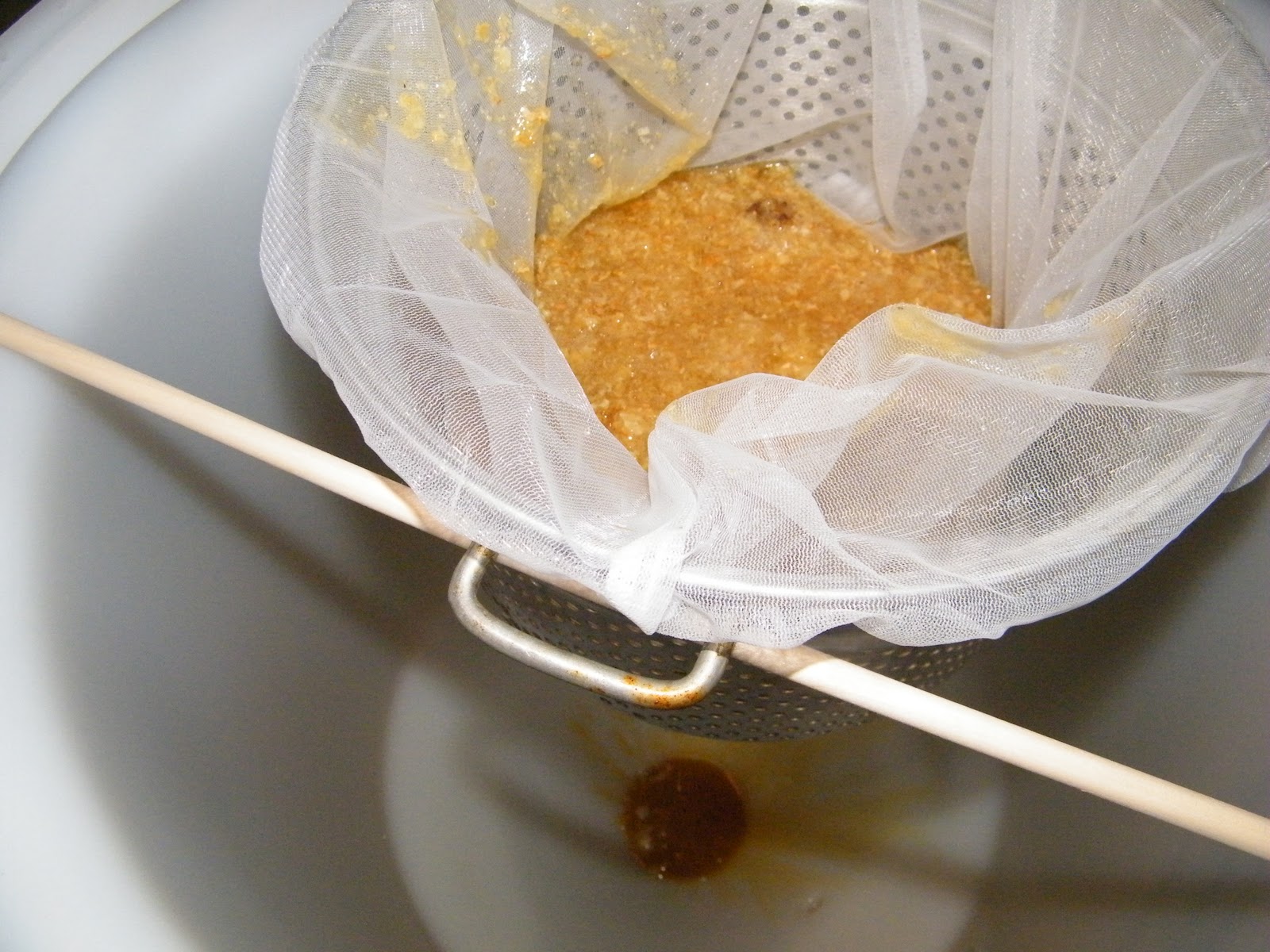
 We used a busted conical fermentor, a giant sieve, and a paint-filter bag. I dumped the crushed wax and honey into the bag that was carefully placed in the sieve and then into the conical fermentor.
 And now it sits and filters.

We have aprox. 1 quart of honey. Harvested more today. The bees were on the defensive, poor girls. I have 5 stings and still standing, barely.
The rosemary is in bloom. This is good early season food for them.


We have aprox. 1 quart of honey. Harvested more today. The bees were on the defensive, poor girls. I have 5 stings and still standing, barely.
The rosemary is in bloom. This is good early season food for them.