Showing posts with label books. Show all posts

6.01.2012

10 list

"T" by Jacob Magraw.

While my American literature students read The Great Gatsby, I was again struck by the importance of gratitude in our lives. These characters are corrupt, hollow men and women. They follow the siren song of the American Dream, or live in spiritless boredom, destroying everything around them, once they have it. They have no gratitude, only desire. Only greed, hunger, and  the belief that they will be filled by something that will only continue to eat them.

Thus, with great gratitude, I present my list for this week:
1. This beautiful and inspiring garden of "T" by the Seattle artist Jacob Magraw. So lovely.
2. Beginning a morning ritual, even if it's just a few simple, slight changes to my morning routine.
3. Being a teacher.
4. Having the ability to surround myself with people who inspire me and push me to do better, be better.
5. A moonlit bike ride over the St. John's bridge.
6. My breath.
7. For you, reader.
8. Digging in the dirt, planting food and flowers.
9. Self-improvement and growth. I am a garden that I must tend.
10. Stories.

4.11.2012

made from scratch: sweet potato tacos

What you need:
a large sweet potato
5 roma tomatoes
1 jalapeno pepper
1 shallot clove
3 green onions
as many garlic cloves as you can  handle
extra sharp cheddar
olives
cilantro
cumin
lemon zest
fresh squeezed lime juice
salt
corn tortillas

What you do:
1. roast the sweet potato to delightful perfection (or if short on time, microwave it)
2. slice tomatoes, pepper, shallot, and green onions into chunks; peel garlic cloves. broil on low for 15 minutes, then on hi until just starting to blacken.
3. while broiling, chop olives (I used a can of black olives, minus the ones I ate) and cilantro (a healthy handful). douse with lime juice, a teaspoon of cumin, salt, and a teaspoon of lemon zest.
4. take broiled veggies out of oven and place into blender/food processor. puree.
5. taste everything. does it taste delightful? if not, add what you feel it needs: more cumin, more salt, more garlic, more spice.
6.grate a bit of cheese.
7. cut roasted potato in half and loosen from skin with a spoon. (I then drizzled some fig balsamic on it for shits and giggles.)
8. lightly brown tortillas in some oil. form into taco-esque shapes.
9. stuff with each ingredient to your heart's content.
10. garnish with pickled onions.

Each ingredient should taste wonderful separately. Imagine how it will taste when you're done.

This recipe was inspired by last week's episode of The Splendid Table on NPR. Since the recipe wasn't published, I just made up my own.

Much of my cooking of, passion for, and sharing of food is inspired by The Everlasting Meal. Buy a copy. It's an amazing book. Seriously, this meal could not have happened without these two sources. The book helped me catch The Splendid Table when the interviewee was speaking of a fridge-full of well-made condiments and his love of pickled onions, reminding me of the book.

Other delights from my kitchen of late: homemade cauliflower soup using left-over stack, pesto made from cauliflower cores and the stems of greens, and picked onions.

3.20.2012

an ounce of action and a bundle of spring

Running is becoming less painful as more and more shades of pink and green appear and spring begins. Despite the cold rain and rainy cold and slush and snow and rain and clouds and wee bits of sun and clouds. Fractious weather, fractious season. But I surpassed my running goal this week, reaching 11 miles. So this week's goal is 12, if the weather is kind and willing.

Other goals for this wonderful week:
Finish my grandmother's embroidered portrait.
Complete my lame-ass PSU class! Hooray!
Build planter boxes for kitchen windows.
Choose a theme and create invites for baby shower for J.

I found this lovely blog by a Portland writer and artist. Her name is Alicia Paulson, and she said this about starting and maintaining her blog in an interview over at Feeling Stitchy. It really resonated with me:

I had been a writer all my life and had worked as a book editor -- but before I started blogging I hadn't written a word just for myself in over eight years. So blogging was, in a lot of ways, a return to a version of myself that I had lost along the way. In the moment, it was sort of a direct reaction to these feelings of barely controlled professional chaos I was experiencing: staying organized on the blog helped me re-organize my real life and work in real time, somehow. But in a much larger way it also allowed me to reconnect to an essential part of myself that I had kind of put behind me. I think my reasons for blogging are still exactly the same as they were in 2005. I'm still very selfish about it. I still maintain that it's just a place for me to do and say and show what I want. I still see it as a personal blog and a way of telling my own story to myself.


In many ways, I feel this way about my own blog, "telling my own story to myself" and helping me organize my life around the aspects that are meaningful: nurturing health, staying goal oriented, and being creative. And I used to write. I filled journals and comp books with stories, poems, character sketches, and diary entries, and blogging is a way to keep writing--personal, creative, expressive writing--in my life. This is why I value this space and am becoming more confident and more insistent that it is my true voice.
Can't wait to finish my class! I ordered a few books using my free month trial of Amazon prime, so they should be all on my porch by Thursday! They include a book on urban farming by Novella Carpenter and a guide on over 400 embroidery stitches.

3.18.2012

Food for Thought

As I look at the canvas of my new yard and future garden, as I personally feel the reverberations of the global economic crisis, and as spring beckons, I am opening my eyes to those whose ideas inspire me to act, even if those actions are in my own backyard: converting my shed to a home for seedlings, chickens, and rabbits; creating a eco-friendly duck pond; using rain barrels and other irrigation methods to conserve water; making my way along the learning curve of beekeeping; and trying to make food that is colorful, healthy, local, and organic.

Here are some of the aids, inspirations, and politics behind these decisions.

The first and last are important TED speeches, and the middle one is a really beautiful 6-minute film.
Helena Norberg-Hodge speaks about localizing the economy on TED.
A beekeeper collects honey from an amazing rooftop garden in NYC.
Chimamanda Adichie speaks of the danger of the single story on TED.

Books:
Gaia's Garden: a guide to home-scale permaculture by Toby Hemenway
The Essential Urban Farmer by Novella Carpenter
Farm City by Novella Carpenter
An Everlasting Meal by Tamar Adler

What is inspiring you of late?

2.13.2012

bookish

Swamplandia!Swamplandia! by Karen Russell

My rating: 2 of 5 stars


The New York Times ranked Swamplandia! as one of its notable books for 2011, and I found the first forty pages lovely and engrossing, with a bizarre plot that seemed to examine the notions of time and memory. And then, after the first forty pages, I became somewhat indifferent to this book. It seemed sloppy and amateurish. I kept thinking: "Well, if it's a notable book for 2011, I have to be missing something, right?"


But I don't think so. Russell's writing is highly--and often overly--stylized. The plot was awkward. The characters were often two dimensional. Larger issues were not resolved or were skirted around. The symbolism is often heavy-handed and cliched.


And yet, I wouldn't give up on Russell yet. She's young and has talent. There were moments--unfortunately rather spread out and few--but moments nonetheless where I was dazzled by her writing's poignancy, poetry, and insight.


Here's such a moment:


"'God' was a word I used as a spell-breaker. Sometimes it worked, and sometimes it didn't. 'God,' I'd whisper, feeling sometimes an emptiness and sometimes a spreading warmth. If a word is just a container for feeling, or a little matchstick that you strike against yourself--a tiny, fiery summons--then probably I could have said anything, called any name, who knows? I didn't have a normal kid's ideas of the Lord as an elderly mainland guy on a throne. The God I prayed to I thought of as the mother, the memory of love. She was my own mother sometimes, baggy-eyed and smiling in the Chief's heavy canvas work clothes in the morning, one of the Chief's cigarettes hanging from her mouth. The Our Father and the Hail Mary I'd picked up somehow by osmosis but it was her name I invoked out there, her memory I summoned like a wind I could lean into, and I liked this prayer much better: Mom, please help me to find Ossie. Please help me to make the net" (178).


View all my reviews

2.01.2012

bookish

AngelsAngels by Denis Johnson

My rating: 5 of 5 stars


Denis Johnson is a master of hauntingly beautiful imagery in the midst of plain-out fucked up situations involving under-privileged characters who have little to hold onto. Someone said in a review that this book is magic realism: I disagree; it's the imagery of the high, the drunk, the desperate, and the dying. This book is so carefully crafted that although it's only two hundred pages long, it feels like an epic, taking the reader on a drunken Greyhound bus ride through Ohio and Pennsylvania, a brutal tour of Chicago, and a crime-ridden and drug-filled spree in Phoenix. Johnson is able to zoom in, like a camera, intensely on a moment, as we do sometimes in life, where suddenly we stop and notice the most minute and beautiful thing: the sulfur snap, lighting, and burning of a match before lighting a cigarette, for example. Everything goes into close focus, time slows, and then, suddenly, everything speeds up again.

This book reminds me of the film Requiem for a Dream, filled with madness, sadness, and sometimes a tender love, an understanding of the beautiful, and a mourning of what could have been but never really was.


View all my reviews

1.26.2012

bookish


The Hunger Games (The Hunger Games, #1)The Hunger Games by Suzanne Collins
My rating: 4 of 5 stars

Finally, I succumbed and read this fast-paced, compelling story about Katniss, the girl on fire, and her journey into the arena for the Hunger Games, and I'm now considering pushing for this as a novel for freshmen year, with a female hero and plot and writing that, I would argue, is as sophisticated as Ender's Game (a book that I do not enjoy teaching) with its futuristic dystopia and first-person narration from the point of view of a young girl who is driven to survive and terrified to love, as she deals with the violent death of her father, the emotional breakdown of her mother, and the conflicted relationships that she encounters during the Hunger Games. A lot of interesting topics to explore in a 9th grade classroom, with students who are being taught to truly understand characterization and theme.


View all my reviews

6.01.2011

bibliomania!

Toni Morrison's Song of Solomon is now, perhaps, my favorite of her novels due to its simultaneous accessibility and complexity. Morrison has crafted this novel with painstaking care, and yet, it does not feel over-worked. Everything seems to act on multiple levels: the names, the Biblical allusions, and even the ending of the novel which sparked debate at our book club discussion. Morrison tackles issues of race in America, with characters who are former black slaves and Native Americans; class and social status, especially when complicated with race; coming of age; gender; community; and family. And the fact that she so carefully and purposefully deals with these issues is one reason that the novel is accessible: the book seems to work for everyone on some level, even if read in a non-political light as the story of a young man's hero's journey into the abyss and redemption. I find that I would like to read this book again, perhaps in a class, and perhaps in conjunction with a study of the Song of Solomon and the Book of Ruth and certain other texts from the Bible.
John Connolly's fantastical narrative takes a young boy during WWII into parallel life and world. As I was reading this novel, the 9th grade lit. teacher in me kept thinking: Hero's Journey. That's what this is; the classic tale retold. The protagonist must go on a journey and fight literal demons and his own demons and flaws before he can return home, changed for the better and better prepared for the worst. Connolly seems to be quite intentionally using the structure of the hero's journey as a metaphor for life and mortality; as the character faces challenges and fights for things beyond his own wants and needs, he learns to forgive, to heal, to grow, and to accept death as a painful but natural part of life. This novel reminded me a bit of Neil Gaiman's Coraline and Pan's Labyrinth.

Another book that I've read recently was The Coming Home Cafe by Gayle Pearson. This is a sweet story that I would gladly give to young readers about the Great Depression and a girl with an adventurous and altruistic spirit who decides to jump on a train and live the life of a hobo, traveling from city to city across the country in search of work. One of my freshmen gave it to me, still feverish from how much she loved it, and as I read it, I rather wished I was young enough to be captured by its magic. Am I too old? Or was the fire just not in the writing? I am not sure. Perhaps this is why I recommend the book for young readers only.

Next up for book club: A Visit from the Goon Squad by Jennifer Egan.

4.21.2011

"Margarita-love and destroy"

I just finished Mikhail Bulgakov's novel The Master and Margarita. I feel a bit intoxicated from it; I want to turn back and reread it with more care and attention. This first time through was mostly for plot. I had to struggle with who was who and how they were connected. I still don't understand all of the connections and relations. I need to let the book settle within me a bit, but I want to include some enticements and some support for the curious reader.

Margarita's flight:
Margarita gave the broom another upward prod, and the mass of rooftops fell away, replaced by a lake of quivering electric lights. Suddenly this lake rose up vertically, and then appeared above Margarita's head, while the moon shone beneath her feet. Realizing that she had turned a somersault, she resumed her normal position, and when she turned to look, she saw that the lake was no longer there and that in the distance behind her there remained only a rosy glow on the horizon. A second later and it, too, had vanished, and Margarita saw that she was alone with the moon, which was flying above her to her left. Margarita's hair continued to stand up like a haystack, and the moonlight whistled as it washed over her body. Judging by how two rows of widely spaced lights below had merged into two unbroken fiery lines, and by how rapidly they vanished behind her, Margarita surmised that she was traveling at monstrous speed and was amazed that she was not gasping for breath.


The Queen:
The march was being played in Margarita's honor. She was given the most gala reception. Diaphanous mermaids stopped their round dance over the river and waved to Margarita with seaweed. Their moaning salutations carried out over the deserted, greenish shore and could be heard from far away. Naked witches jumped out from behind the willows, formed a line, and began to bow and curtsy in courtly fashion. A goat-legged creature rushed up to Margarita and kissed her hand. Spreading silk on the grass, he inquired whether the queen had enjoyed her swim, and suggested that she lie down and rest.


Satan's ball:
Margarita's head began to spin from the smell of the wine, and she was about to leave when the cat performed a trick in the pool which detained her. Behemoth cast a spell on something near the maw of  Neptune, and hissing and bubbling, the bubbly sea of champagne drained from the pool at once, and Neptune started spewing forth a foamless, bubble-less, dark-amber wave. The ladies shrieked and squealed, "Brandy!"--as they rushed away from the edges of the pool and took refuge behind the columns. The pool was filled in a few seconds, and the cat, after turning three somersaults in the air, landed in the billowing brandy. He crawled out, shaking himself off, his necktie shrunk, his opera glasses, and the gilt on his whiskers gone.


The Moon:
Night began covering the forests and meadows with its black kerchief. The night ignited sad little lights somewhere far below, alien lights that were no longer of any interest or use either to Margarita or the Master. Night overtook the cavalcade, spreading over them from above and scattering white specks of stars here and there in the saddened sky.
Night was thickening, flying alongside the riders, grabbing at their cloaks and pulling them off, unmasking all illusions... And when the crimson full moon rose up to meet them from behind the edge of the forest, all illusions vanished and the magical, mutable clothing fell into the swamp and drowned in the mist.


Cast of characters (I compiled this for my own sanity while reading. It is not exhaustive and may not be 100% correct):

Berlioz: literary editor (Mikhail Alexandrovich Berlioz or Misha)
Ivan: poet (Ivan Nikolayevich Ponyrov or Bezdomny)
Rimsky: financial director of theater
Varenukha: theater manager (Ivan Savelyevich)
Latunsky: the Master's editor
Styopa: theater employee; Berlioz's roommate (also Likehodeyev)
Andrei Fokich: bartender at Variety Theater
Vasily Stepanovich Lastochkin: bookkeeper of theater
Prokhor Petrovich: chairman of the commission
Anna Richardovna: Petrovich's secretary
Nikanor Ivanovich Bosoi: chairman of the house committee
Maximilian Andreyevich Poplavsky: Berlioz's uncle
Woland: Satan
Korovyo: black magician, Woland's retinue
Hella: Woland's witch
Abaddon: figure Woland's retinue
Behemoth: the cat; Woland's retinue
Azazello: Woland's assistant
Natalya: Margarita's maid
Nikolai Ivanovich: Margarita's downstairs neighbor

3.17.2011

A Night with Jane Eyre


For her honors project, one of my freshmen read and submitted an essay to Multnomah County Library sponsored contest for the Focus Features 2011 adaptation of Jane Eyre. She read the novel, wrote a draft, revised, submitted, and was selected as one of the winners. As a result, she and four guests were invited to attend "An Evening with Jane Eyre," and she chose a 9th grade friend, her mother, her brother, and me to accompany her.


First, we went to the Heathman Hotel, where we supped on Stilton cheese, cucumber sandwiches, and other delicacies that Jane and Mr. Rochester might have enjoyed back in that era of wind-swept moors and gothic romances. Then the author Chelsea Cain read to us the opening of Charlotte Bronte's novel, and I was reminded of how much I've coveted having a window seat to hide away in and read ever since reading that particular passage of the book. The two freshmen girls and I all took home a brand new, free copy of the book, which was perfect, because I was sitting there thinking, "I am definitely going to want to re-read this (for the 3rd time!) after tonight." I had such a good time with these young minds, so excited and passionate, lovers of books and learning! Both girls agreed that the fact that they'd won a free copy of a book had made their entire night! Their entire week! I concurred!

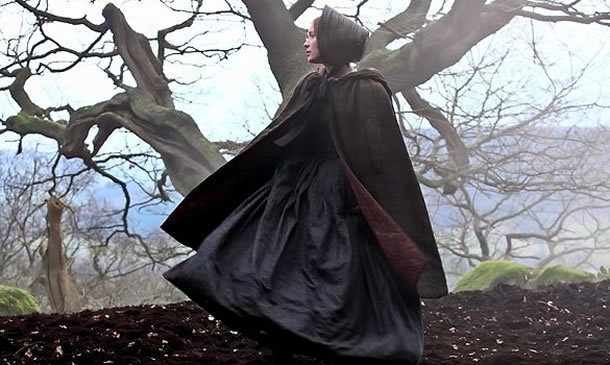
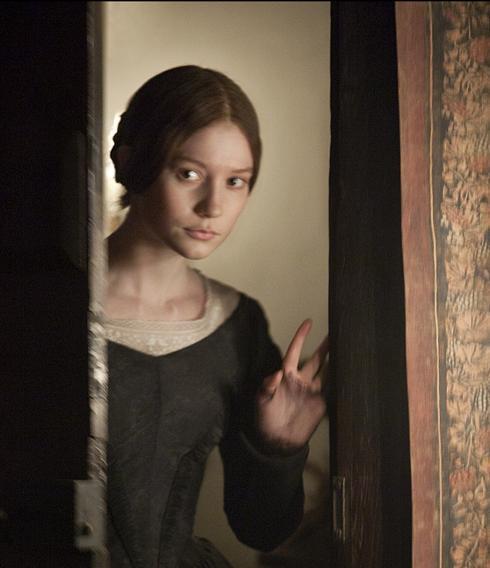
And I do want to re-read it! Especially after the film. I've rarely seen such chemistry between two people on screen. There was so much tension in their unquenched desire; there were whole scenes during which I didn't move or breathe. Michael Fassbender and Mia Wasikowska were so well casted in these roles and the cinematography was so stunning; I want to wander on the dusky, wind-swept moors in a cape and return home to my brooding lover. Or, maybe just revisit my two favorite Bronte novels, Jane Eyre and Wuthering Heights while curled up in a window seat.


3.02.2011

book fervor

After much hesitating, I finally went ahead and read The Time Traveler's Wife by Audrey Niffenegger. I saw the movie and was not impressed. I was more impressed with the book, although I wouldn't rave about it to anyone as great literature. Looking for a good story that will make you cry? Read this book. Looking for great literature? Skip it. The writing was sometimes painful (obnoxious similes), and some of the characters were mechanical. As I read, I knew they were characters. I didn't believe in them (e.g. Gomez). But here's what I liked: the allusion to The Odyssey and the allegorical nature of the novel, representing how people manage (or don't manage) stress, the danger of getting stuck in the past, and the struggle to overcome loss.

Breath, Eyes, Memory by Edwidge Danticat (love that name!) is a beautiful but sad, difficult book about a young Haitian girl who immigrates to the U.S. to live with her mother. She learns that her mother conceived her through a brutal rape, and her mother still suffers from the trauma. The mother and daughter's relationship derails, and it takes all of their strength and will to come back together again. I wouldn't recommend this book to many; it's saturated with pain, poverty, abuse, and death. However, it's well written with strong, believable, and often fierce characters.

P.S. My 11th graders (7 out of 10 of them will tell you they do not like to read at all) and I are enjoying reading aloud A Raisin in the Sun by Lorraine Hansberry. If you haven't read it, do so now! Then watch the film version starring Sidney Poitier.

2.14.2011

for the love of books

It's been quiet on the blogging front, although there have been adventures galore to write and report on. Here's what I have been doing instead of blogging: reading!

This novel, set mainly in Portland during the 1980s, is so freaking sad yet beautiful, about a young biracial girl who struggles because she feels unaccepted by both whites and blacks while simultaneously struggling with the tragic death of her family and the guilt of being the only survivor. This might be a hot contender for lit. circles with my American lit. students next year. Apparently, the author wrote the book with teens in mind as it reflects her own background, upbringing (she grew up in Portland in the 80s), and that there were no books targeted to her.

American Lit. students are about to read A Raisin in the Sun, which I just reread for the 4th time, maybe. Maybe more. I love, love, love this play. I don't think I've ever taught a piece of literature that I love more than this play. Every page reminds me of how much I love it. Hansberry's characters' struggle for integrity and pride is overwhelming, and this play has such a strong message of empathy and love. I cannot wait to share it with students.

A few friends and I have also started a book club. Our first pick: Lolita by Vladimir Nabakov. I'm the only one in the group who has read it before, which is a travesty. They all must read it, and I will gladly read it again. Nabakov is a genius. Stay tuned in March for more on book club.

What are you reading?

1.28.2011

Friday Fantastic

This book is one that I would probably turn my crooked nose up at. Look at that title! I can't even say it! The Guernsey Literary and Potato Peel Pie Society! What? But my mom recommended it and offered to mail it my way, and I trust my mom's taste in books, and here's why: she loved The Glass Castle and hated Eat, Love, Pray. Two excellent examples of my mom's taste.

So, I read this book, and the best adjective I can think of for it is "darling." Yes, I'll say it again, this book is absolutely darling. The characters are enchantingly real, which is what makes this book so charming. Told through a series of letters written back and forth amongst friends and strangers, this book is set immediately after WWII in London, primarily in Guernsey, and is about building community through a shared need to support one another in a difficult time and a shared love of literature and eventually, a shared love of neighbor. Not overly saccharine nor dark and often funny, I'd recommend this read to anyone who needs a darling, darling story to carry them into another place and time.

12.02.2010

Pride and Prejudice vs. Pride and Prejudice

The other night, I watched for the second time only, the 2005 version of "Pride and Prejudice," which is lusty and romantic.
 Sometimes too lusty and romantic. Sometimes the characters seem too wild. They're made to do things that seem alien to the time in order to fit into the romantic mood the movie tries so desperately to establish.
However, the film is so gorgeously shot that despite the moments when it seems like the story moves in fast-forward or when Lizzie's best lines are chopped from the screenplay or Darcy has lines that are foreign and new, the film is still a lovely thing to watch.
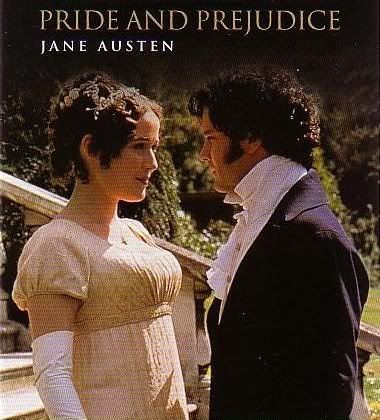
But I must say, for character and pacing, I still love, love, love the BBC version.
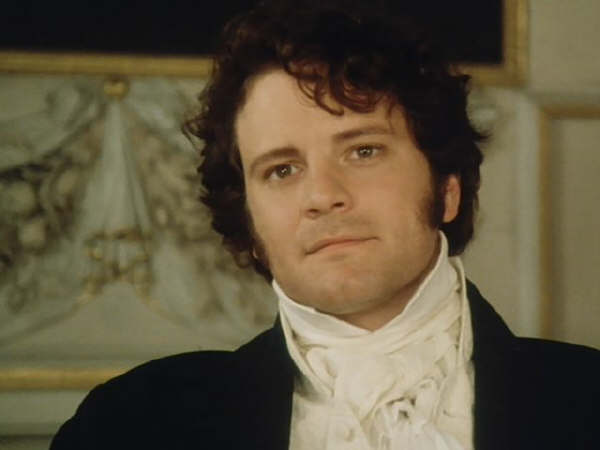
This look alone has made hundreds of girls become fans of Jane Austen. For my sister and I, my mother made us watch this movie with her, and from that point on, there was no turning back. Pride and Prejudice, Emma, Sense and Sensibility, Mansfield Park...I became fans of them all.
And yes, Dame Judi Dench is wonderful (and surprisingly sexy--but then, as I said, the movie is lusty) as Lady Catherine de Bourg, but I love the subtle wit and emphasized stupidity of both Mr. Collins and Lady Catherine in the BBC version.
 
So for wind-swept, soap operatic romance, go for the 2005 version with Kira.
Otherwise, it is, it is, it is the BBC version all the way.

11.22.2010

dress your family in corduroy and denim

I have finally read a David Sedaris book. I believe I attempted to read this book several years ago, but it didn't catch my interest. Did I not get his wit? Perhaps. Here's how most of the chapters go: David acts like a selfish prick; David repents. Either that, or it's a strange encounter, often with members of his own family, like his brother whose dialog is unlike anything I've ever heard (with corny jokes such as: "This coffee's like making love on a canoe. It's f***ing near water") or his self-employed sister who tears the linoleum off of her kitchen floor and sells it. A lot of the stories are funny, but sometimes they're simultaneously sad as he addresses peoples' loneliness, insecurities, irrational and bullying behavior, bigotry, and other foibles.

It's the school year, so I spend a lot of time reading for work, including Ender's Game, One Flew Over the Cuckoo's Nest, and student papers, so Sedaris is a great read during the school year. Intelligent without being taxing; amusingly sharp and witty; and each chapter is its own little story rather than a long, ornate plot to try to untangle after a day of being intellectually drained.

8.17.2010

summer reading

One of the first novels I read this summer was Aryn Kyle's The God of Animals, a book left for me by my neighbor on my doorstep, dog-eared and much loved, and I could see why. There's a slightly disturbing quality to this novel. The writing is quietly beautiful, not overly showy or lyrical, but with moments that seem almost cinematic. Perhaps the novel is slightly disturbing because it's about normal people, in all their fucked-up-ness and in all their beauty. It's a pragmatic tale, in a sense, because one doesn't finish it loving or hating humanity. Rather, I bow down to how beautifully humanity can be portrayed.
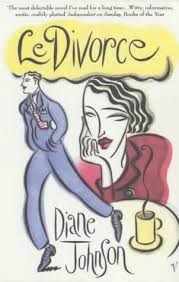
I tried and tried and tried, but Le Divorce by Diane Johnson is just not my thing. Ironically, I chose this novel because I'd heard stellar things about how it was written, and that's precisely why I just couldn't finish it. Although I still might, eventually. But the narrator seems to be endlessly telling and telling and telling about her life in Paris. It's like listening to an endless techno track with the same beat with no hook, no drop. I just couldn't get into it. Not that this is a bad book, by any means. It just didn't ever grab me.
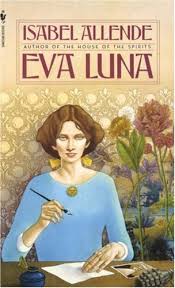
 Oh, Isabel Allende! When I think of writers I love, her name is one of the first that comes to mind. While I did like House of Spirits better, Eva Luna is almost as wonderful, as magical, as rich in narratives and lyrical language. When reading Allende, one steps into a magical world rich in spices, aromas, ghosts, warriors, love, and all with a political backdrop both ominous and hopeful. She deserves her spot in the cannon of great magical realists of South American literature.
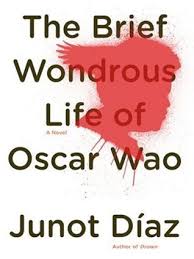
This novel perhaps tops them all, with its staggeringly beautiful, lyrical writing juxtaposed next to the street jargon and slang of the two narrators (and the way Diaz makes the vernacular lyrical). But the language isn't its only beauty. His protagonist, Oscar, defies cultural stereotypes, fitting more neatly into the stereotype of the white nerd, except that he's Dominican, not white. These race issues are explored through the characters' varying definitions of what it means to be Dominican. And all of this told in the shadow, the curse, the fuku of Trujillo. This novel, an epic family narrative, is about the victims and survivors of Trujillo, the scar of Trujillo, and the beauty and pain of being a Dominican, whether still at home or part of the diaspora. In part, it's a novel about finding peace within oneself and it's also a novel about returning home.
This carefully written novel is about the fall of the British empire, the descent of the old families of influence and rise of the middle class and the building of the suburbs. It reminded me quite a bit of Remains of the Day for that reason, and it depicted the psychological and physical decline of these upper class characters. Therefore, this novel deserves more credit than being merely brushed aside as a spooky story. But it also is a spooky, gothic story (reminding me a bit of Poe and Hawthorne), bone-chillingly spooky at times, and a bit of a mystery that the reader has to solve for herself in the end. For Waters leaves many clues, but she presents no firm resolutions for her readers. However, the clues point to a rather surprising answer to the riddle that jars the reader in one of those delicious ways that remind us why we love a good story.

6.08.2010

"an edible gardening primer"

I finished reading Grow Great Grub: Organic Food for Small Spaces by Gayla Trail. The title is a bit misleading, because really, this book is for anyone. It's about growing great grub, period, whether your space is small or large. I got the book from the local library, but I'm tempted to run to Powells and buy myself a copy to use as a reference. My copy of her first book, You Grow Girl, is dog-eared from all the times I've checked on it. That's because both of her books are filled with recipes (such as one for Dark Opal basil jelly), creative projects (like sewing yourself a gardening apron), and gardening ideas, tips, photos, and words of encouragement such as:

"I'm not going to lie to you. There is a heck of a lot to learn when it comes to growing a food garden. But you don't need to know everything now in order to begin. You'll learn over time through doing, succeeding, and yes, even failing. To become a food gardener, you need only a little direction and a plant or two to begin with. Expanding from there, your experience and confidence will grow along with your garden. And most important, remember this: without a doubt, you will make mistakes. All gardeners do from time to time, even the experienced ones. Grant yourself permission to learn through messing up, and before you know it, you'll find yourself with bowls of strawberries, bundles of fresh herbs, the perfect tomato sandwich, and your own fantasy food garden." (7)

These words hearten me when my bean and zucchini seeds don't sprout (are they getting eaten or rotting in the soggy, soggy ground?) or my best tomato plant gets demolished by a chicken because I foolishly had it out in the open. It reminds me to look at my ripening strawberries, my tall garlic, the flower buds on my peas, the increased population of my bees, and my many other garden wonders.

One more thing about Grow Great Grub: not only is she a gardening goddess, she also produces the entire book almost entirely by herself (and I believe with the help of her mister), including words, photos, and layout.

In other lit. news, I read with the American lit. juniors The Great Gatsby and One Flew Over the Cuckoo's Nest (fun book to teach). I also read The Bean Trees, and a book on butterfly gardening. I've also dipped into scads of books, short stories, poems, and graded hundreds of papers (sweet, sweet summer vacation=bliss of reading whatever I want and no grading!).

3.16.2010

Renegades and Rebels

Here's a photo of a renegade rosebush that's sprouted in our front yard. I want to tear up the the grass that's growing around it and plant columbine, hollyhocks, foxglove, cosmos, marigolds, and nasturtium.

My salmonberries seem to have all survived their move from last July and the winter. They all have leaves and a few buds on them. My strawberries that I brought with us from the old house on NE 18th are also doing well, and I found this bugger munching on them when I went outside with my camera. He was sentenced to death.


I celebrated yesterday's new moon by transplanting my tomatoes into homemade newspaper containers, and now my shelves are crammed with seedlings, large and small. I have brandywine, orange-flesh purple smudge, Amish paste, Willamette, and Oregon spring tomatoes in addition to peppers, kale, endives, chives, thyme, sage, lavender, oregano, hollyhocks, foxglove, and more.

The plotting and planning and thinking and constructing of the hive continues. In the meanwhile, I need to buy my veil and hat, gloves, honey, and beeswax in preparation for a delivery slated for April 8. Spring seems to be whirling by already, and it hasn't even officially started. The cherry blossoms are almost done. I discovered this blog, Norm's Bees Naturally, and he does some top-bar beekeeping. I haven't had a chance to really dive into it yet, but I'm excited to find this resource. He references another blog worth exploring, Guerrilla Gardening. I have mixed emotions about guerrilla gardening, but for the most part, I believe I'm in favor as long as it's done with respect and with understanding.

I haven't been able to do a whole lot of reading for myself of late. Tonight, after I make this for dinner, I am going to be reading junior lit. commentaries. But here's some of the books I've been dipping my toes into:

Spring break is before me, and I will be re-reading The Bean Trees for school (planning to teach it), diving into Harlem Renaissance literature, and hopefully reading more about bees, animals, vegetables, fungus, and dirt.

I'm proud of how far I've come though. Last year, I thought the green leaves in this picture were just invasive, huge weeds.
I now know that it's comfry, a plant that's deep roots suck nutrients up from deeper layers of untouched soil, making great compost and compost tea. (Elijah, el gatto in the picture, is right now curled up on my lap).

Here are the ugly teenagers:
One day I'll get a picture that does justice to their hugeness. They are not the little fluff balls they were a month ago, that's for sure.

The grape hyacinths are out and everywhere:

2.16.2010

book 8: The One Straw Revolution

The One Straw Revolution: An Introduction to Natural Farming, by Masanobu Fukuoka, published by New York Review of Books, is a manifesto about living closer to nature and embracing our connectivity while accepting and feeling liberated by the limits of human knowledge. Part user's manual and part spiritual memoir, this book is one that shook me at my core in a very personal and possibly life-changing way. Fukuoka discusses his realization that human knowledge is based on nothing, and he is liberated from what he thought he knew. This led him down a radical path of natural farming, and he outlines the basic principles of natural farming.
But for much of the book, he takes the reader on a spiritual journey beyond how-to, examining the necessity for a holistic view, rather than a discriminatory view, of the world. An allegory for this would be studying bees. A discriminatory view would be a specialized study of bee anatomy and habits without seeing flowers or trees or water or predators or any of the other myriad of things that a bee sees. A holistic view sees that all of nature is connected, with a web of relationships and many roles for each aspect to fulfill in creation of a whole balance. He talks about the discriminating diet vs. the natural diet. The discriminatory diet relies on facts about nutrition (which is always changing and often wrong), whereas a natural diet relies on the availability of local food and on taste (he argues that our food should be delicious).

I can't pretend to understand all of Fukuoka's insights, but I was touched by this book. It was published in 1978, and so a forerunner of permaculture and an important book well worth the read.

2.09.2010

book 7: Notes from No Man's Land by Eula Biss


Published by Graywolf Press, St. Paul, Minnesota, 2009

"To flee within your own nation is to create a kind of captivity for yourself. A self-imposed exile. And so, the despair of the suburbs" (from "Babylon").

This evocative book speaks on race and identity with creativity of thought, powerful metaphor, and associative language. At times these essays terrified me, made me feel culpable and ashamed of my own belief in artifice and myth as she simultaneously pointed out her own growth within her understanding of identity and race in the U.S. She writes about alienation and community, often simultaneously. And she is able to take and compare the surprising and unexpected in order to make insightful, startling comments on our past and on our present society and culture. This book is worth buying and sharing and reading over again.